
Nyari Pariola
Nyari Pariola is a member of Omega’s Network of Experts. She is a human rights lawyer, peace and security scholar, and anti-torture expert. Nyari recently represented Omega at a Regional Conference organised by our UATC partner FIACAT and ACAT Côte d’Ivoire. Below, she shares some of what was discussed at the Conference. This article is part of a series. You can read Nyari’s other reflections here.
In April 2026, ACAT Côte d’Ivoire hosted a Regional Conference on torture together with FIACAT in Abidjan. The Conference brought together key actors in the fight against torture in prisons and aimed to contribute to the prevention and combating of torture in detention in sub-Saharan Africa.
Discussions at the Conference examined the often overlooked issue of supporting the post-detention rehabilitation and reintegration of victims of torture in prison. This is critically important as torture and ill- treatment in detention remain a persistent reality across Sub-Saharan Africa.
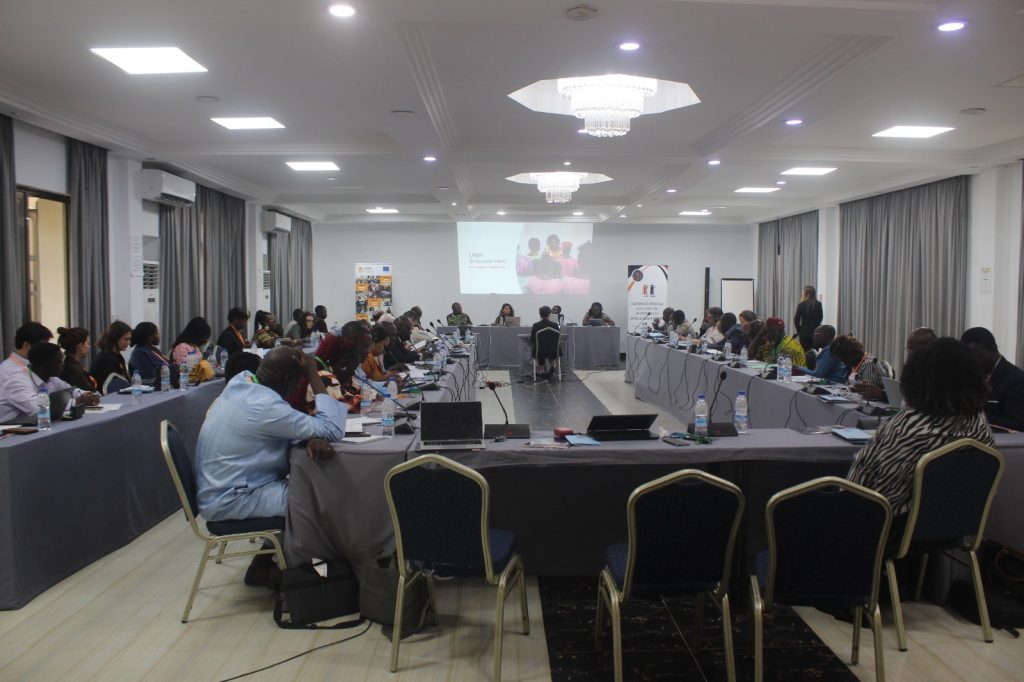
But what is less visible – and too often overlooked – is what happens after prison. Some have termed it, “one of the most neglected truths in the struggle against torture: the fact that the suffering often does not end when the prison gate opens”. For many survivors, release does not mark the end of suffering. Instead, it is the beginning of a new struggle: to heal from deep physical and psychological trauma, to rebuild dignity and identity, and to reintegrate into communities that may not understand – or may even stigmatise – them. This is where rehabilitation and reintegration must do the work of restoring the human dignity that torture destroyed. Unfortunately however, in many of our contexts, systems for rehabilitation and reintegration remain fragmented, under-resourced, or entirely absent.
This is unfortunate because rehabilitation is not charity: it is a right, and a legal obligation under international and regional law.
The panel asked a difficult but urgent question, “What happens after prison—and what must Africa do differently?” It acknowledged that too many survivors leave detention with no medical care, no psychosocial support, no legal remedy, no reparations, and no pathway back into society. This is not only a human rights failure – it is a governance failure, a development failure, and a moral failure.
One of the panellists, a survivor herself, grounded the discussion in lived reality and reminded us that rehabilitation is not only a policy issue but a human and dignity issue. The legal panellist addressed a central truth, that healing cannot depend on goodwill alone. It requires law, institutions, accountability, and enforceable rights.
The conclusion was that if we are serious about combating torture, then rehabilitation and reintegration must be part of the solution and three practical messages stood out:
- The first was that we need national systems that connect survivors to medical care, psychosocial support, legal aid, and economic opportunities after release. Reparations and complaint mechanisms must exist not only on paper, but in reality.
- The second was that civil society remains essential in reaching survivors, providing services, documenting abuses, and building trust. But they cannot carry this burden alone, stronger partnerships and referral systems are needed.
- Lastly we were encouraged to remember that rehabilitation is not charity, that it is an integral part of justice and we therefore need to support states to implement survivor-centred responses.
Read more about Nyari’s work and expertise here.