
The week of June 15th, Omega together with Amnesty International France, attended Eurosatory 2026, a major defence and security exhibition held in Paris. Both organisations were there as independent monitors and the organisers were aware of our prescence. This visit formed part of our long-running work to monitor arms and security fairs. Our arms fair monitoring work helps identify manufacturers and traders of prohibited goods, track the launch and spread of new technologies, and test whether organisers and authorities are effectively enforcing rules intended to prevent the promotion of banned weapons and inherently abusive equipment.
Omega has documented arms and security trade fairs for more than three decades. Previous Omega research has shown that prohibited or abusive equipment continues to appear at major international arms fairs despite legal restrictions and exhibition compliance policies.
Eurosatory describes itself as a global event for defence and security, bringing together military, security, government and industry actors. The 2026 edition placed particular emphasis on artificial intelligence, autonomous capabilities, unmanned systems, and remote engagement. Although, the primary focus of Eurosatory is military weapons and equipment, technologies promoted for military use, can often later be deployed for public order policing, border control and internal security. As such, monitoring such events is essential to not only to prevent the promotion of prohibited equipment, but also to identify emerging trends and assess the risks to human rights that they may pose.
Prohibited equipment identified and removed
During the fair, Omega and Amnesty International France identified several weapons and types of equipment that appeared to fall within categories prohibited from promotion or display under the EU Anti-Torture Regulation and the Convention on Cluster Munitions.
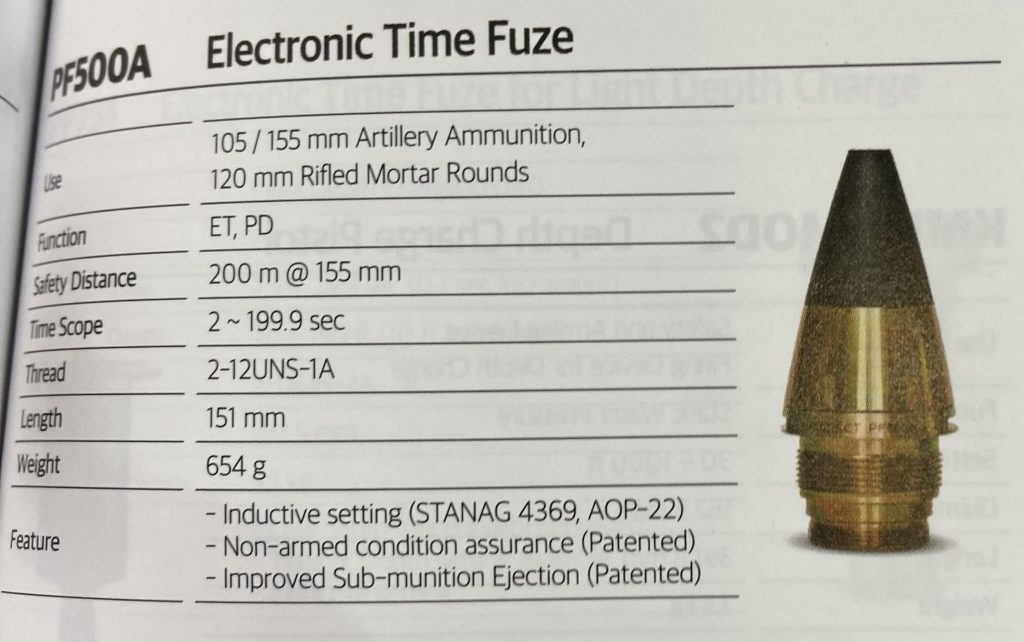
These included the PF500A fuze (left) associated with cluster munitions, displayed by Poongsan (South Korea) on its stand (a model) and included in its catalogues.
The company SMPP (India) also promoted 155mm cargo ammunition in its catalogue.
Both were equipment of concern under under the Convention on Cluster Munitions.
Omega and Amnesty International France also identified a spiked arm shield promoted by Fox Armour (China) in a catalogue and on a poster (the poster was identified by the fair organisers), which appeared to fall within the scope of the EU Anti-Torture Regulation.
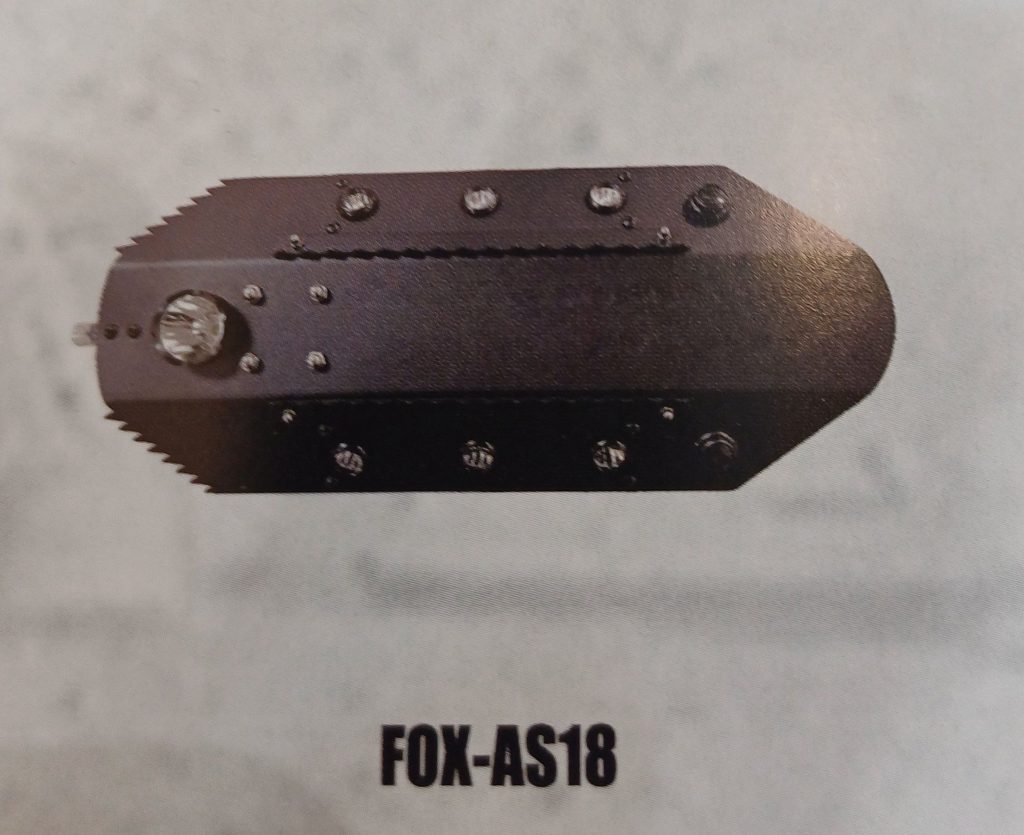
Omega and Amnesty International France raised these concerns with the organisers. Following those discussions, the fuze model was removed from display and the relevant catalogue pages were cut out. The catalogue promoting the spiked arm shield was removed, the poster was covered, and the catalogue containing the cargo ammunition reference was withdrawn.
Amnesty International France also identified the PF500A fuze at the Paris Airshow in 2025. After raising the issue with the organisers of the airshow, they accepted that the fuze was a cluster munition component and should not have been promoted in a catalogue at the fair.
Equipment of concern
Several exhibitors also promoted items that Omega considers should be prohibited including equipment identified by the UN Special Rapporteur on Torture as requiring prohibition from trade. These included, direct contact electric shock weapons, ammunition containing multiple kinetic impact projectiles and multi-barrel launchers. Such products can present serious risks because of their inaccuracy, indiscriminate effects, or potential to deliver excessive quantities of chemical irritants.
Restrictions on Israeli exhibitors
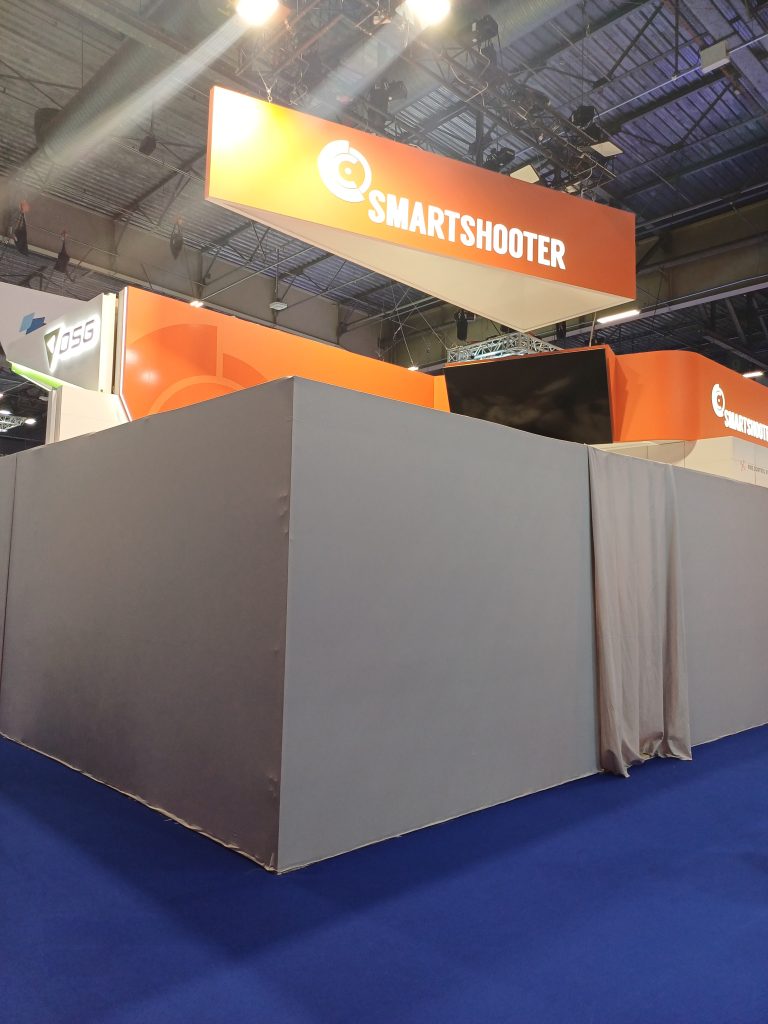
Eurosatory 2026, took place against the backdrop of restrictions on Israeli exhibitors. Public reporting before the event stated that Israeli companies were only authorised to display air defence, missile defence or anti-ballistic systems, with offensive weapons excluded. At the fair, several smaller Israeli exhibitors were found by organisers to be promoting systems that could be used offensively and had their stands boarded up.
Emerging trends: armed drones and AI-enabled targeting
One of the most notable trends at Eurosatory was the continued expansion of armed first-person-view (FPV) drone systems and related remote engagement technologies. Although Eurosatory is primarily a military exhibition, a number of companies indicated that their systems had already been supplied to law enforcement agencies or could be adapted to carry less lethal payloads.
This is an important area for further scrutiny. Drone systems, payloads and launch mechanisms that are initially marketed for military use may be transferred into policing, prison, border control or crowd-control contexts. Such crossover raises serious human rights questions, particularly where systems may disperse chemical irritants, fire kinetic impact projectiles, or enable force to be used at a distance with reduced accountability.
AI-enabled target acquisition was another prominent theme. These systems were generally marketed for military applications, but the potential movement of some technologies into law enforcement and internal security contexts will require close monitoring. Omega will continue to assess the companies, products and claims associated with these technologies so that future transfers into policing or security use can be identified and scrutinised.
Improving transparency and accountability
During the event, Omega and Amnesty International France also engaged directly with representatives of the organisers. This dialogue provided an opportunity to raise concerns in real time and seek remedial action.
Independent monitoring is an essential part of any credible compliance process. Omega was therefore grateful to be given access to monitor the event and for the responsiveness of the fair organisers to our findings. We call on other trade fair organisers and national authorities to adopt similar screening and monitoring processes to ensure that prohibited goods are not displayed, promoted, advertised or otherwise made available at arms and security fairs. Where breaches are identified, action should be prompt, transparent and meaningful.
Omega’s work at Eurosatory will feed into our wider arms fair monitoring programme and public database of arms and security fairs. By documenting exhibitors, products and promotional materials, Omega helps researchers, journalists, human rights defenders and policymakers better understand how military, security and policing technologies are marketed, where regulation is failing, and how gaps can be closed.
Any questions? Contact us.